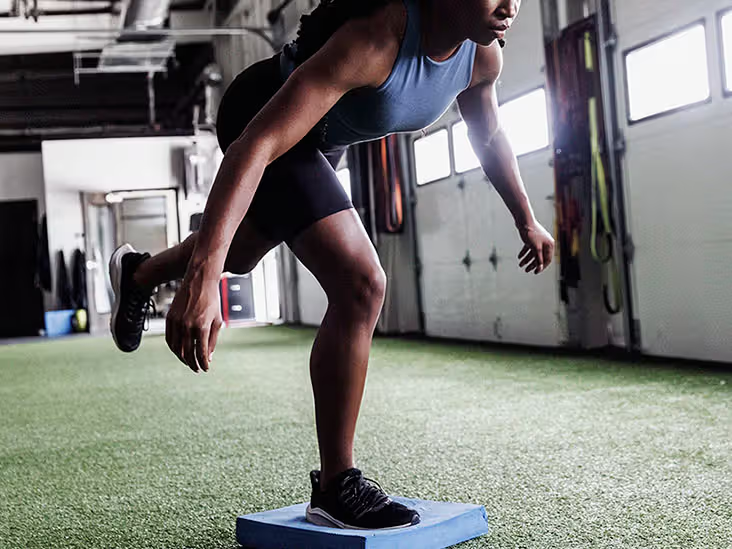
 Proprioception Training for Athletes: How to Prevent Sports Injuries and Improve Balance
 Proprioception Training for Athletes: How to Prevent Sports Injuries and Improve Balance
Sports injuries can occur in an instant. One awkward landing, sudden change in direction, or loss of balance can result in an ankle sprain, knee injury, or muscle strain that sidelines athletes for weeks or months.
While not every injury can be avoided, athletes can dramatically reduce their risk by improving balance, coordination, and body awareness. One of the most effective — yet often overlooked — ways to do this is through proprioception training.
At OSR Physical Therapy, we regularly incorporate proprioception exercises into rehabilitation and injury prevention programs to help athletes throughout the Southwest Twin Cities stay healthy and perform at their best.
What Is Proprioception?
Proprioception is your body’s ability to sense its position and movement without needing visual cues.
Medical professionals define proprioception as: The ability to sense stimuli arising within the body regarding position, motion, and equilibrium.
In everyday life, proprioception allows you to:
- Walk without watching your feet
- Touch your nose with your eyes closed
- Maintain balance when you slip or trip
- Adjust your body position quickly during movement
For athletes, proprioception is essential for reaction time, balance, and safe movement mechanics.
Why Proprioception Is Important for Sports Injury Prevention?
Most sports require rapid movements that challenge balance and joint stability.
Examples include:
- Jumping and landing
- Sprinting and sudden stops
- Cutting and pivoting
- Avoiding contact with other players
- Running on uneven surfaces
During these movements, the body must react quickly to maintain proper alignment and stability. When proprioception is weak, joints such as the ankle, knee, or hip can move into unstable positions and increase injury risk.
Common injuries related to poor proprioception include:
- Ankle sprains
- ACL injuries
- Knee sprains
- Hip instability
- Lower back pain
Research: Proprioception Training Reduces Injury Risk
Research consistently shows that athletes who incorporate proprioception exercises into their training programs experience fewer injuries.
A long-term study following professional basketball players found that incorporating proprioception and balance exercises resulted in:
- 81% reduction in ankle sprains
- 78% reduction in lower back pain
- 65% reduction in knee sprains
These results demonstrate how improving neuromuscular control can significantly reduce sports injury risk.
Benefits of Proprioception Training for Athletes
Better Body Control
Athletes rely on precise body control to accelerate, decelerate, pivot, and land safely.
Improved Balance
Balance training strengthens stabilizing muscles around joints and reduces injury risk.
Faster Reaction Time
Proprioception helps the body react quickly when balance changes or unexpected movements occur.
More Efficient Movement
Athletes with better neuromuscular coordination move more efficiently and with less strain on joints.
Adaptation to Different Surfaces
Whether transitioning from turf to grass or pavement to trail, proprioception allows the body to adjust quickly.
Best Proprioception Exercises for Injury Prevention
Athletes can improve proprioception through targeted balance and stability training.
Single Leg Balance
Standing on one leg challenges stabilizing muscles and improves joint awareness.
Three-Way Kick
Balance on one leg while kicking the opposite leg forward, sideways, and backward.
Single Leg Squats
 Single Leg Squats
Single-leg squats strengthen the muscles that stabilize the hip, knee, and ankle.
Crossover Walks
Crossover walking improves coordination and lateral stability.
BOSU Ball Training
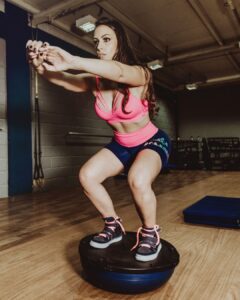
Exercises on a BOSU ball create an unstable surface that challenges balance and neuromuscular control.
Examples include:
- BOSU squats
- BOSU lunges
- BOSU rotational movements
How Often Should Athletes Train Proprioception?
Athletes do not need a full workout dedicated to proprioception training.
Adding 1–2 balance or stability exercises to each workout can significantly improve coordination and reduce injury risk over time.
Consistency is the most important factor.
When to See a Physical Therapist
Athletes should consider physical therapy if they experience:
- Frequent ankle sprains
- Knee instability
- Repeated sports injuries
- Difficulty returning to sport after injury
- Balance or coordination problems
Sports physical therapists can assess movement patterns and develop customized programs to improve stability, strength, and neuromuscular control.
At OSR Physical Therapy, we specialize in helping athletes prevent injuries and return to activity safely.
Sports Physical Therapy in the Southwest Twin Cities
Athletes across the Southwest Metro trust OSR Physical Therapy for sports rehabilitation and injury prevention programs.
Our clinics are located in:
Our team provides expert care for athletes recovering from injuries or looking to improve performance and prevent future injuries.
Frequently Asked Questions About Proprioception
What is proprioception training?
Proprioception training involves exercises that improve balance, coordination, and body awareness. These exercises strengthen the communication between the brain, muscles, and joints.
Does proprioception training prevent ankle sprains?
Yes. Research shows proprioception training can reduce ankle sprains by up to 81% by improving joint stability and balance.
What athletes benefit most from proprioception training?
Proprioception training benefits athletes in sports that involve jumping, cutting, and rapid direction changes such as basketball, soccer, football, volleyball, and tennis.
Can physical therapy improve balance?
Yes. Physical therapists use targeted exercises to improve balance, coordination, and neuromuscular control.
Improve Balance and Prevent Sports Injuries
Proprioception is one of the most important components of sports injury prevention and athletic performance.
Improving body awareness, balance, and movement control can help athletes:
- Reduce injury risk
- Improve reaction time
- Move more efficiently
- Perform at a higher level
If you want to improve your balance, recover from an injury, or prevent future injuries, the sports rehabilitation specialists at OSR Physical Therapy can help.